






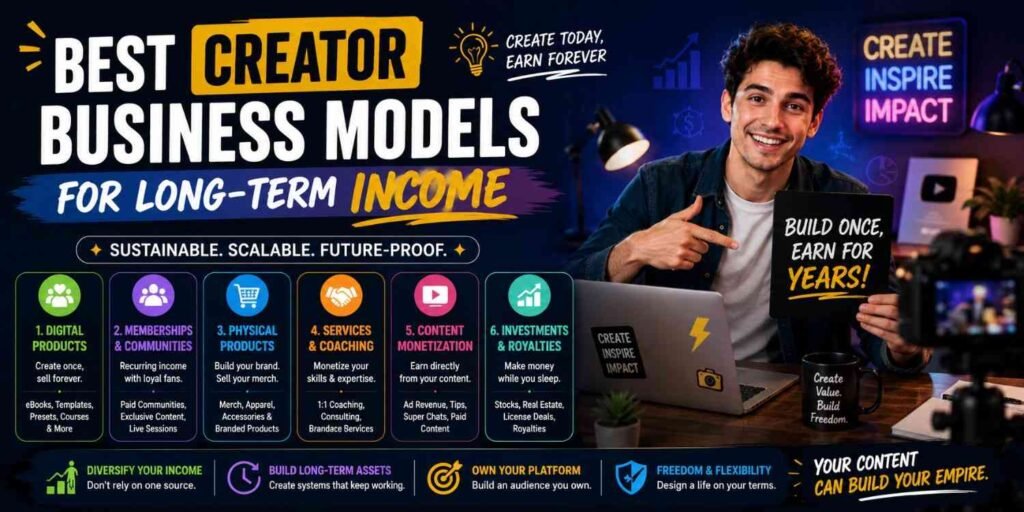
For the past decade, creator business models have been turning enthusiasts into entrepreneurs. These strategies tap into a number of revenue streams that help artists monetize their talents, personalities and content. Producers used to make money from ads and sponsorships, but now they use YouTube, TikTok and Instagram to make money from a range of channels and to amplify audience engagement.
Ad revenue is important and the YouTube Partner Program is a good example of how platform based revenue sharing can help creators. Revenue from ads and sponsorships can fluctuate, particularly due to changes in regulations and algorithms. The key is diversification. Today producers diversify revenue streams by apparel, digital items, patronage and affiliate connections to mitigate risk and grow.
How Content Creators Make Money?
Content creators use different income streams to reach different audience and content types. Direct patronage and knowledge of ad revenue helps creators build sustainable businesses.
Ads/ad revenue
The primary source of revenue is the monetization of the platform. In the nearly three years, YouTube’s ad revenue sharing has paid out nearly $70 billion to artists. TikTok and Instagram brand partnerships drive ad revenue. Brands are spending billions on influencer marketing. Creator-centric advertising to reach $37 billion by 2025. Creators typically receive a share of ad revenue based on views and engagement. Winners leverage platform tools and optimize content for algorithms to maximize ad revenue.
Brand Partnerships, Sponsored Content
Brands recognize that creative authenticity fosters engagement and conversions. That’s an average spend of over $1.7 million on enterprise creator marketing per organization. Producers can pay to advertise videos, live streams and social media posts on YouTube and TikTok to promote products. Long-term brand deals offer more consistent income than one-off sponsorships for top producers. Audience relationships are what drive sponsorship and marketing impact.
Membership and subscription sites
Subscription revenue has increased thanks to services. They allow creators to build a loyal fanbase willing to pay for early access or exclusive content. That’s a sign of increased demand: Substack had 5 million paid subscribers as of March 2025. The best artists can make over $94,700 a year in subscriptions alone, especially if they are selling digital and personalized products. Membership platforms provide fan engagement and a consistent income.
Partner Marketing & Product Sales
Affiliate marketing is a must for making money. The artists are making a killing, about $5 billion in retail sales, according to LTK, formerly Like to Know It. Good converting affiliate links and content ideas around products, services or tools can make you passive income. Sometimes affiliate marketing is sometimes blended with branded clothing and accessories or with digital downloads to increase revenue.
Digital products and online courses
Instructional material Digital products create a passive income stream, and also make the creator an expert in their niche, attracting new fans and prospects. Many successful creators make over $67,000 a year in revenue from instructional material These community access or coaching offerings can be a big revenue boost.
Creator monetization and revenue sharing platforms
Platform choice is still a big factor for creative earnings. YouTube created more than $70 billion in brand ROI over three years, exceeding TikTok. These platforms are built to share ad revenue, brand deals and monetization of live streams. 86% of creators use these systems. They leverage AI to accelerate content creation, editing and analytics to optimize revenue.
Live shopping, DTC storefronts and short-form video monetization are new opportunities for creators. Ad revenue, brand deals and products allowed MrBeast to build a scalable income environment. These tools and platforms can help creators increase their earnings and future-proof their business.